Red Meat, Health, and Questioning the Narrative
RED MEAT, HEALTH AND QUESTIONING THE NARRATIVE
There is a lot of information about what is “healthy,” and everyone seems to be an expert, but how often do we stop and question the narrative?
One message that needs to be questioned is the one around red meat. We are told it is harmful to our health, that it increases the risk of disease, that we should be moving towards more plant-based diets, and that this is better not only for us, but for the planet as well. Much of this messaging comes from medical professionals and health organisations, which can make it feel difficult to question.
One of the most important things I have come to learn is that we need to be willing to do exactly that - to question the narrative, to not always accept information at face value, and to take a more active role in becoming advocates for our own health.
This is something that was reinforced during my studies with Cyndie O’Meara through the Functional Nutrition Academy, where the focus was on returning to real food and questioning the narratives we are often presented with.
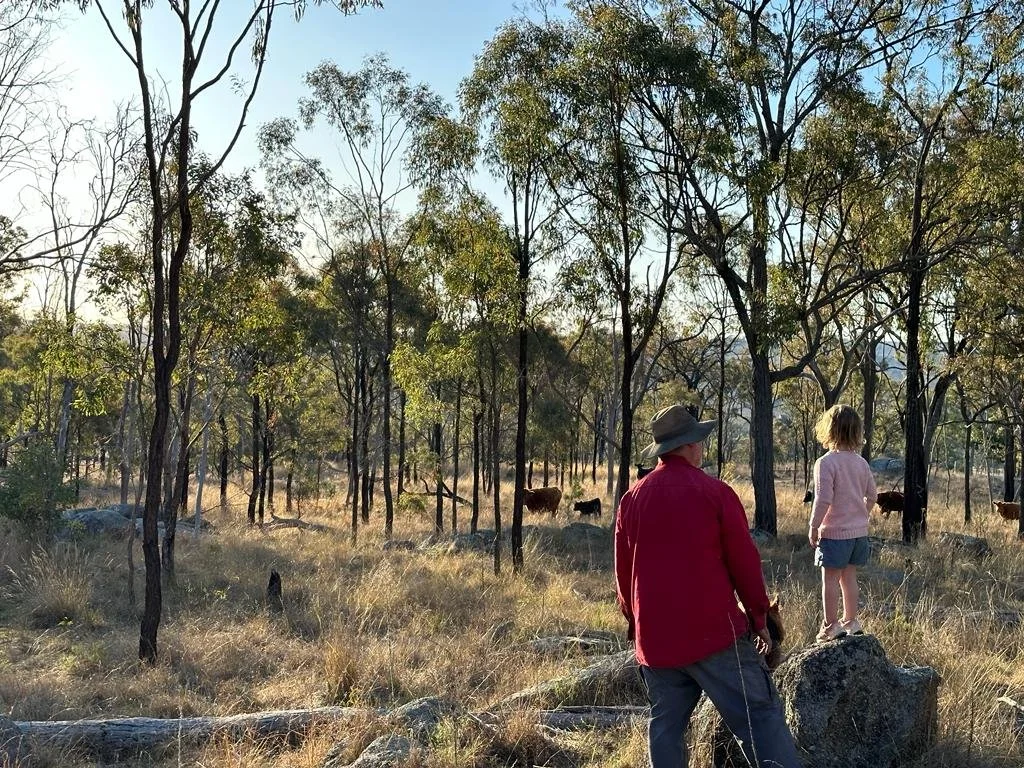
For me, this has meant coming back to the basics - real, whole foods, understanding where my food comes from, what is in it, and how it is produced. It has also meant exploring the positive impact regenerative farming is having, which offers a very different perspective on both health and the environment.
Coming Back to Real Food
I find it hard to believe that something as simple as meat, packaged by nature, rich in protein, natural fats, and essential nutrients, is harmful to our health. Humans have been eating an ancestral, whole-food diet including meat for millions of years.
In researching this topic, I revisited the work of Robb Wolf, a former research biochemist and Diana Rodgers, a registered dietitian, in their book Sacred Cow. They challenge the idea that meat is harmful to our health and the planet and instead focus on how our food is produced and the choices we can make for our own health. I believe this conversation deserves more attention than it is given.
When I look at something like a plant-based burger, with a long list of processed ingredients, many of which I cannot pronounce, I find myself asking a simple question.
How can this be more nutritious than a piece of real, natural, unprocessed meat?
The lines between processed and real food have been blurred. A fast-food meal and a piece of pasture-raised beef are often grouped into the same conversation, yet they are fundamentally different. Processed meats often include additives, preservatives and high levels of refined sodium. In contrast, natural pasture-raised meat is whole, nutrient-dense food.
It is also very difficult to overconsume whole, nutrient-dense foods like red meat in the way we can with highly processed foods. Real food is naturally satiating, which makes them easier to regulate without strict control.
When we remove the distinction between real whole foods and processed foods, we lose clarity. And when we lose clarity, we make decisions based on fear and convenience, rather than understanding.
Not All Protein Is Equal
When you look beyond the headlines and consider what supports better health, I come back to the same foundations – real, nutrient-dense food that the body can easily recognise and use. This is where red meat starts to shine.
Not all protein is equal. Animal proteins provide a complete amino acid profile in a highly bioavailable form and are rich in leucine, the amino acid required to trigger muscle protein synthesis. They also deliver essential nutrients such as vitamin B12, iron, zinc, choline, omega 3 fatty acids, vitamins A, D and K2 and creatine, which directly support energy, brain health, and muscle maintenance, particularly as we age.
It is not just about how much nutrient is in a food, but how much your body can absorb and use it. Compared to many other protein sources, especially plant-based options, red meat delivers amino acids in higher concentrations and in a form the body can use most efficiently.
To put that into perspective, if we compare similar amounts of protein from red meat and many plant-based sources, the difference is not just the total protein. It is the amino acid profile, the leucine content, and how well the body can use it.
Many plant-based protein sources contain lower levels of leucine and are less bioavailable, meaning a greater total portion of plant-based food is often required to achieve the same effect. When we are thinking about building and maintaining muscle, particularly as we age, this becomes an important distinction.
Muscle: The Missing Piece in the Conversation
As I have spoken about before, one of the biggest risks to our long-term health is the gradual loss of muscle as we age. Muscle plays a critical role in metabolic health, supports immune function and insulin sensitivity, strength, independence, and resilience.
This is reinforced by leading researchers in the field of protein metabolism and ageing, such as Stuart Phillips, a Professor at McMaster University whose work has helped shape our understanding of protein needs across the lifespan.
In a recent conversation on The Dr Gabrielle Lyon podcast, Phillips explains that protein requirements increase as we age, not decrease, due to our reduced ability to build and maintain muscle and muscle mass is one of the strongest predictors of longevity.
So the ‘quality’ of our protein really matters!
What I continue to notice, both in my training and with the people I work with, is a lack of nutrient-dense food in their diets. Many are eating what they believe to be “healthy,” yet are under-consuming quality protein, losing muscle over time, and becoming less strong and less capable as they age. This feels like a critical part of the conversation when we talk about long-term health.
The Red Meat and Cancer Narrative
The link between red meat and cancer is often presented as clear and conclusive. But when you look more closely, much of the evidence comes from observational studies, which can show association but not cause and effect, and lack detail.
Researchers such as Robb Wolf, who has explored the limitations of nutrition research, point to the influence of “healthy user bias”, where lifestyle factors such as smoking, exercise, and processed food intake are often bundled together with meat consumption.
So we are left asking a more important question. Is it the meat, or the lifestyle that surrounds it that correlates to cancer?
Nutrition scientist David Klurfeld, who spent over two decades at the US Department of Agriculture and was directly involved in the International Agency for Research on Cancer Review that classified red meat as “probably carcinogenic,” has since spoken out about the limitations of that evidence.
He explains that the classification was based largely on observational data, where small associations can be influenced by broader lifestyle factors, and that these findings are often interpreted with more certainty than the data itself supports.
Because this review sits within the World Health Organization framework, its conclusions have gone on to influence public health messaging and dietary guidelines around the world. Over time, that messaging has been simplified into something much more definitive than the original evidence supports.
Red meat is also rarely eaten in isolation. It is often consumed alongside processed foods, alcohol and poorer lifestyle habits, making it difficult to isolate its true impact.
If you are interested in exploring this further, I recently listened to a conversation with David Klurfeld, where he discusses this in more detail. It was a balanced and thought-provoking discussion. Link provided below.
Looking Beyond the Plate
It is not just about what we eat, but how our food is produced. The quality of our food, our health, and the degradation of our soil and ecosystems have been significantly influenced by the shift towards industrial agriculture.
Much of the current criticism around meat is based on the destructive industrial farming systems. But when we look at regenerative approaches, the picture is completely different.
Practices such as rotational grazing improve soil health, support biodiversity, and contribute to more resilient ecosystems. This is something explored in Sacred Cow, where the conversation shifts away from simply reducing meat, to understanding the role animals can play within the environment and a well-managed food system.
It is a reminder that the impact of food is not defined by a single category, but by the way it is produced and its impact on the environment. If you would like to read more on this, I would highly recommend Robb Wolf’s book, The Sacred Cow, link below.
Final Thoughts
We are living in a time of endless information, where complex topics are often reduced to simple messages, often influenced by vested interests.
We need to be willing to question the information we are given, even when it comes from trusted sources. Not to reject it, but to challenge and seek to understand it more deeply, and to decide what is right for our own health.
Real, nutrient-dense foods that the body can recognise, and use are not the problem. They are part of the solution. For me, red meat, when sourced from quality producers and eaten as part of a whole foods diet, has an important role in my health.
Where possible, I choose locally sourced, grass-fed and grass-finished beef. I prefer to buy direct from farmers or at least know the source. That connection feels important, because it shifts the focus away from quantity and towards quality, and brings a level of awareness that is often missing in the broader conversation.
Not everyone will share my food preferences, and that is okay. But I do believe our choices are better informed through understanding and questioning, rather than accepting messages from vested interests and fear, starting with knowing the source of the food we eat.
Resources
If you are interested in exploring this topic further, these are a few conversations and resources I have found helpful:
• Dr David Klurfeld, Are Red Meat Warnings Based on Flawed Science? (podcast)
• Sacred Cow by Robb Wolf and Diana Rodgers (book)
I always find it helpful to listen, read, and then come back to what feels most relevant in the context of my own life.