Longevity is a Choice
Longevity is a Choice
Longevity has become one of the biggest conversations in health right now.
Podcasts, books and social media are filled with conversations about living longer, slowing ageing and optimising health. New tools, supplements and protocols promise to extend life.
But beneath all the noise, I think the real conversation should be much simpler:
How do we want to live in the years ahead?
Longevity is not about living longer. It is about living well for longer.
It is about how we are choosing to live now, in a way that shapes the decades ahead.
Longevity is about preserving our quality of life, capability and independence. It is about building the strength, resilience, health and purpose that allow us to keep participating fully in life.
“The goal is not simply to live longer. The goal is to live stronger for longer.” - Dr Gabrielle Lyon.
What Longevity Really Means
When people talk about longevity, they are often referring to more than simply how long we live. The conversation is increasingly shifting toward healthspan - the quality of those years and our ability to continue living with strength, energy, mobility and independence for as long as possible.
Living longer means very little if those later years are marked by frailty, chronic disease, pain or loss of the simple abilities that allow us to fully participate in life. Unfortunately, for many people, this is not something they think about until health begins to change, mobility feels different, or the first real signs of ageing begin to appear.
The more I learn and experience, the more I realise longevity is not really shaped in our seventies or eighties. It is shaped much earlier.
The strength we build in midlife, the habits we practise in our forties and fifties, even the foundations we establish in our thirties, all quietly shape the physical capacity we carry into later decades.
What would we like to still be able to do at eighty or ninety?
Not extraordinary athletic achievements, just the everyday things that make life rich and independent:
· Carrying groceries.
· Walking up stairs confidently.
· Getting up from the floor.
· Travelling independently.
· Playing with grandchildren.
· Going for long walks.
These simple things require strength, balance, mobility and cardiovascular fitness. The truth is, they are far easier to maintain than they are to rebuild.
This means longevity is not about adding years to life. It is about protecting the quality of those years long before we arrive there.
It is about taking control of your health today so you can continue living well in the years ahead.
The Foundations of Longevity
The encouraging part is that many of the things that support longevity are not extreme or complicated. They are the same foundational habits that repeatedly appear across almost every area of health.
They are the daily practices that help build resilience, maintain function and support the quality of our lives over time.
Movement – Strength, Muscle & Mobility
Movement sits right at the centre of longevity.
“Exercise is the most potent longevity drug we have” – Dr Rhonda Patrick.
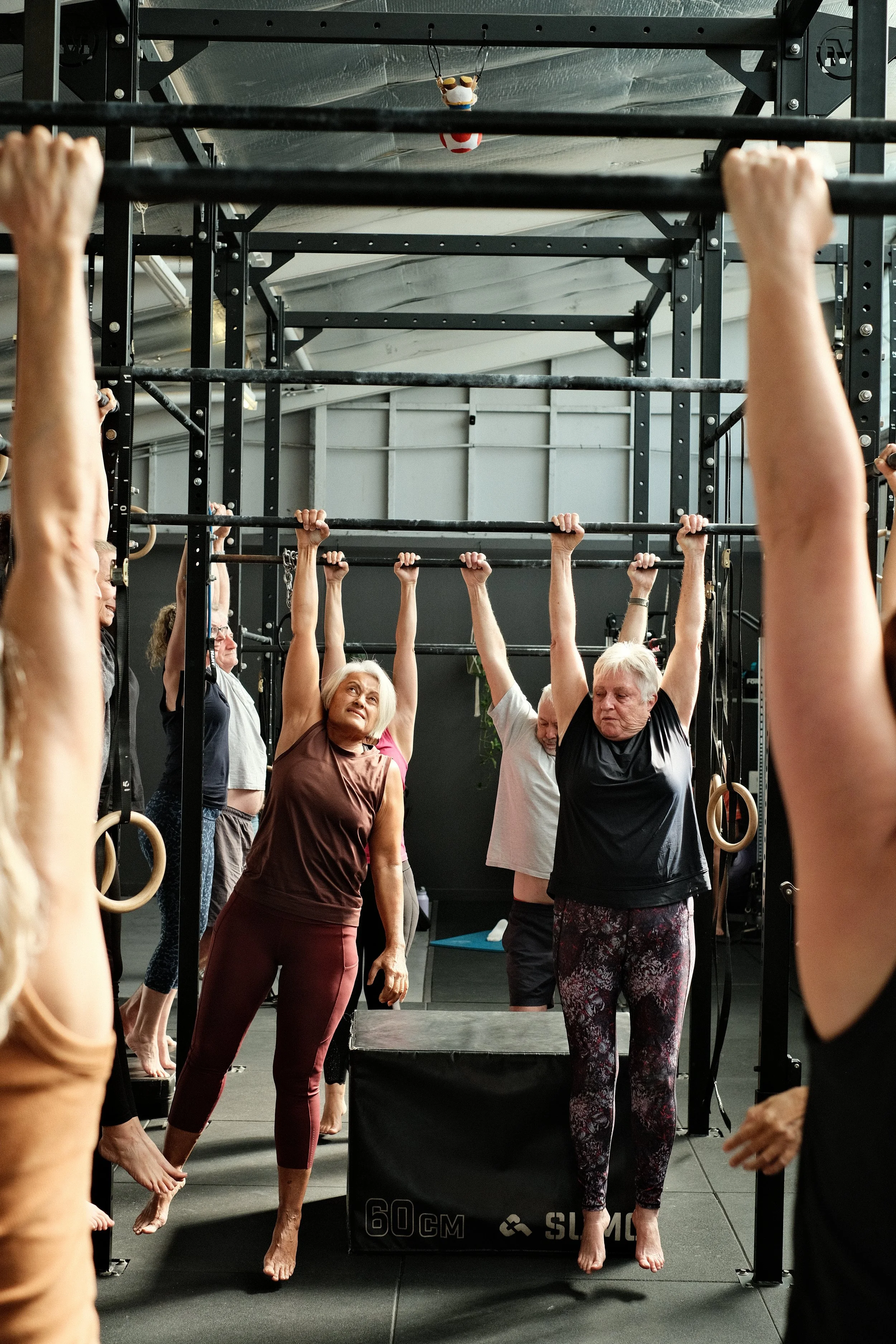
Maintaining physical function is about preserving the ability to move well, lift, carry and continue participating fully in everyday life as we age. Strength, endurance, mobility and stability all play an important role in maintaining independence and quality of life over time.
Longevity research is increasingly pointing to the importance of strength and muscle. Physician and researcher Gabrielle Lyon often describes muscle as “the organ of longevity,” highlighting the important role muscle plays not only in movement, but also in metabolic health, resilience, recovery and healthy ageing overall. Muscle helps regulate blood glucose, maintain insulin sensitivity and provides an important reserve that the body can draw on during illness or stress.
As we age, muscle mass naturally declines, which is why strength training becomes increasingly important over time.
Research consistently shows that loss of muscle mass and strength is associated with increased risk of frailty, metabolic disease and mortality. A large study published in the British Medical Journal in 2008 found that individuals with higher muscular strength had significantly lower risk of death from all causes including cancer.
Physical decline is often treated as an inevitable part of ageing, but I think we have far more influence over this than we realise. Orthopaedic surgeon Vonda Wright’s work focuses heavily on mobility, bone health, power and maintaining the physical capacity to continue participating fully in life.
“Aging is inevitable. Frailty is optional.” - Dr Vonda Wright
The importance of power and impact is often underestimated. Practices like jumping, carrying load, moving quickly and challenging balance help maintain the strength, coordination and physical confidence that support long-term capability.
Strength, mobility, balance, muscle and bone health are not just fitness goals. They shape how we experience life, move through the world, and maintain independence as we age.
Cardiovascular fitness matters too. Research continues to show strong links between cardiorespiratory fitness and long-term health outcomes. VO2 Max is a measure of how efficiently your body uses oxygen during exercise and is considered one of the strongest indicators of cardiovascular fitness and longevity.
A large study published in JAMA Network Open 2018, found that cardiorespiratory fitness is one of the strongest predictors of longevity. Higher levels of fitness were associated with significantly lower mortality risk.
Movement protects more than muscle and bone. Andrew Huberman, a neuroscientist and professor at Stanford University School of Medicine, often speaks about exercise as one of the most powerful tools we have for preserving brain health across the lifespan.
Movement, strength training and cardiovascular exercise all create adaptations that help preserve resilience, brain health and physical capacity as we age. Biomedical scientist and longevity researcher, Dr Rhonda Patrick often highlights movement and cardiovascular fitness as some of the most powerful tools we have for extending healthspan, and her work continues to reinforce the body’s remarkable ability to adapt, strengthen, and become more resilient when challenged appropriately over time.
“Longevity is not built through comfort. The body adapts when we challenge it appropriately.” - Dr Rhonda Patrick.
This is only a small part of the broader conversation around movement and longevity, and one I will explore more deeply in a future newsletter.
Nutrition
If muscle matters, then nutrition matters too. Protein plays an essential role in maintaining muscle, supporting recovery and helping the body adapt to training.
Gabrielle Lyon speaks strongly about the importance of adequate protein intake. Ageing muscle becomes less sensitive to protein stimulation, meaning older adults often need more, not less, high-quality protein. For many people, simply becoming more intentional about protein intake can be one of the most powerful shifts.
Protein as part of a real, nutrient-dense food diet is key. Food that is as close to nature as possible and prepared with minimal processing contains a natural balance that supports energy, recovery, metabolic resilience, brain health, inflammation and long-term wellbeing.
Sleep & Recovery
Sleep is one of the most underestimated foundations of long-term health.
We often think about sleep as passive rest, but during sleep the body is carrying out enormous amounts of repair and recovery. Hormonal regulation, tissue repair, immune function, metabolic health and brain health are all heavily influenced by sleep quality and duration.
Sleep scientist Matthew Walker often describes sleep as:
“the single most effective thing we can do to reset our brain and body health each day.”
Poor sleep affects almost everything:
· Training feels harder.
· Recovery slows.
· Stress feels amplified.
· Food choices often become worse.
· Energy, mood and cognitive function all suffer.
Over time, chronic poor sleep is associated with increased risk of cardiovascular disease, metabolic dysfunction, cognitive decline and dementia.
One of the things I find most interesting in Walker’s work is the idea that the brain is actively clearing waste during sleep through what is known as the glymphatic system. In many ways, sleep becomes part of the brain’s nightly maintenance and recovery process.
Sleep will never be perfect all the time, especially through busy seasons of life, stress, parenting, shift work or hormonal change. But consistently protecting sleep where we can is one of the most powerful investments we can make in long-term health and resilience.
Please see earlier newsletter for a deep dive into optimising sleep.
Stress Management and Resilience
Modern life places enormous pressure on the nervous system.
Chronic stress, poor sleep, constant stimulation and lack of recovery all influence long-term health in ways we are still fully understanding.
This is one reason I think practices that regulate the nervous system matter so much – movement, time outdoors, breathwork, recovery practices like sauna, moments of stillness, gratitude, and meditation.
Even learning to tolerate appropriate discomfort can help build resilience.
Rhonda Patrick’s work around exercise, heat and cold exposure also speaks to this idea that small amounts of manageable stress can help build resilience. Exercise, heat exposure/sauna, cold exposure/ice baths and other forms of manageable stress can stimulate adaptation and help build resilience over time.
Longevity is shaped by the repeated behaviours that either strengthen or weaken our resilience over time. The body often becomes stronger through challenge, recovery and adaptation.
Nature, Sunlight & Circadian Health
The more technology-driven our lives become, the more I think we need to stay connected to some of the basic rhythms of being human.
Morning sunlight, fresh air, natural movement, time outdoors and feeling connected to nature all influence circadian rhythms, sleep, mood, energy and overall wellbeing far more than many people realise. They help with nervous system regulation and recovery.
I think many of us feel better when we spend more time outside because our bodies were never designed to exist entirely indoors, exposed to artificial light and under constant stimulation.
This is one reason I continue to come back to simple practices like morning light, walking outdoors and spending time in nature and having my bare feet on the ground.
Connection & Purpose
Longevity is not only physical.
Strong relationships and meaningful social connection are consistently associated with better long-term health and wellbeing. In fact, findings from the Harvard Study of Adult Development, one of the longest-running studies on human health, suggest that the quality of our relationships may be one of the strongest predictors of health and happiness as we age.
Connection gives life meaning and richness – family, friendships, community, conversation and shared experiences.
These things shape emotional wellbeing, resilience and quality of life in ways that cannot be measured.
Purpose and Intentional Living
Perhaps the deepest layer of longevity is purpose.
Performance psychologist Michael Gervais often speaks about living with intention, courage and presence rather than drifting unconsciously through life.
That idea resonates deeply with me because health is not simply about extending years.
It is about maintaining the energy, strength and capacity to continue participating fully in a meaningful life - to remain curious, connected, capable and independent.
Not simply adding years to life, but continuing to add life to those years.
“We are all works in progress.” - Dr Michael Gervais
Personal philosophy
Longevity, to me, is not simply about living longer.
It is about maintaining the strength, energy, mobility and resilience to continue fully participating in life.
It is being able to move well, think clearly, remain independent, stay connected to purpose and continue doing the things that matter most.
Longevity is not about age. It is about how we choose to live each day.