A Few Quiet Moments
A Few Quiet Moments
How gratitude, vision and daily intention have shaped the way I live.
This month’s newsletter is a little different. Rather than focusing on movement, nutrition or another aspect of healthy living, I would like to share a simple daily practice that has become one of my most valuable habits.
For almost ten years, I have started most mornings by taking a few quiet moments to reflect, write and set an intention for the day. It has not removed life's challenges, but it has changed the way I see them.
As I have continued learning, different teachers and mentors have added new layers to this practice. What began as a simple gratitude practice has gradually expanded to include a vision for the future and, more recently, a clear intention for each new day. Together, these elements have become a daily ritual that continues to guide me.
Gratitude: Appreciating What Already Exists
The first part of my journalling practice is gratitude.
It began as simply as writing five things I am grateful for today and five things I hope to be grateful for in the future. Yet over time I realised that gratitude is much more than a positive thinking exercise. It is a practice that gently shifts our attention.
Research now supports what I have experienced personally. Practices such as gratitude, reflection and journalling have been shown to improve mental wellbeing, resilience, sleep quality and overall emotional health.
Our brains are naturally wired to notice problems. We focus on what is missing, what needs fixing or what might go wrong. Gratitude does not ask us to ignore life's challenges. Instead, it gently shifts our attention towards what is already good alongside them.
More recently, research published in Frontiers in Psychology found that people with higher levels of gratitude demonstrated greater psychological resilience, lower symptoms of anxiety and depression, and better emotional regulation.
Scientists believe this may be partly explained by neuroplasticity, the brain's remarkable ability to change and adapt throughout life. By regularly practising gratitude, we strengthen the neural pathways associated with positive emotions, helping us become more resilient over time.
Arthur Brooks, a Harvard professor, social scientist and leading researcher on happiness, often describes gratitude as an antidote to our tendency to focus on what is missing. Gratitude doesn't change our circumstances, he says, but it can change our relationship with them.
Over time, gratitude has helped me appreciate not only the significant moments in life, but also the simple things that can easily go unnoticed. A conversation with a friend, a sunrise, time with family, meaningful work, good health, or simply another opportunity to try something new.
Vision: Creating a Future Worth Moving Towards
Several years after discovering gratitude, another mentor Cyndie O’Meara introduced me to the concept of manifesting and the importance of creating a vision for the future.
I know the word "manifesting" can mean different things to different people, but for me it has never been about wishing for something and hoping it appears. It is about becoming clear on the direction you want your life to take and creating a picture of the person you want to become.
Over time, I have come to believe that a clear vision shapes far more than we realise. It influences the opportunities we notice, the conversations we pay attention to, the people we connect with and the choices we make each day.
Long before I was teaching Longevity classes, I had a sense of what I wanted this stage of my life to look like. I could not have mapped out every step, but I had a vision and a feeling of what it might become. There is still a page in one of my journals with photos of a Longevity class. That vision helped me maintain focus during periods of doubt and uncertainty.
Reflecting, I can see how many small decisions were shaped by that vision, the courses I completed, the books I read, the conversations I pursued and the opportunities I was willing to say yes to all moved me a little closer to where I am today.
I am also reminded how fortunate I have been to have people who encouraged me, challenged me, believed in me and opened doors along the way. I am incredibly grateful for each of them.
Today: Living with Intention
More recently, another layer was added to my practice.
A good friend and mentor encouraged me to ask myself a few simple questions each morning.
What matters most today?
What do I want for today?
How do I want to feel?
What do I need to do to support that?
These questions challenge me to think beyond my to-do list and instead consider how I want to show up for myself and others.
So many of us spend our lives replaying the past or worrying about the future. The present moment is often overlooked, despite being the only place where we can create change.
Life is not lived in the past or the future. It is lived today.
A Few Quiet Moments
One reason this practice has remained part of my life for so many years is that it became attached to habits that were already important to me.
James Clear writes about "habit stacking", linking a new habit to an existing one. Looking back, I unknowingly did exactly that.
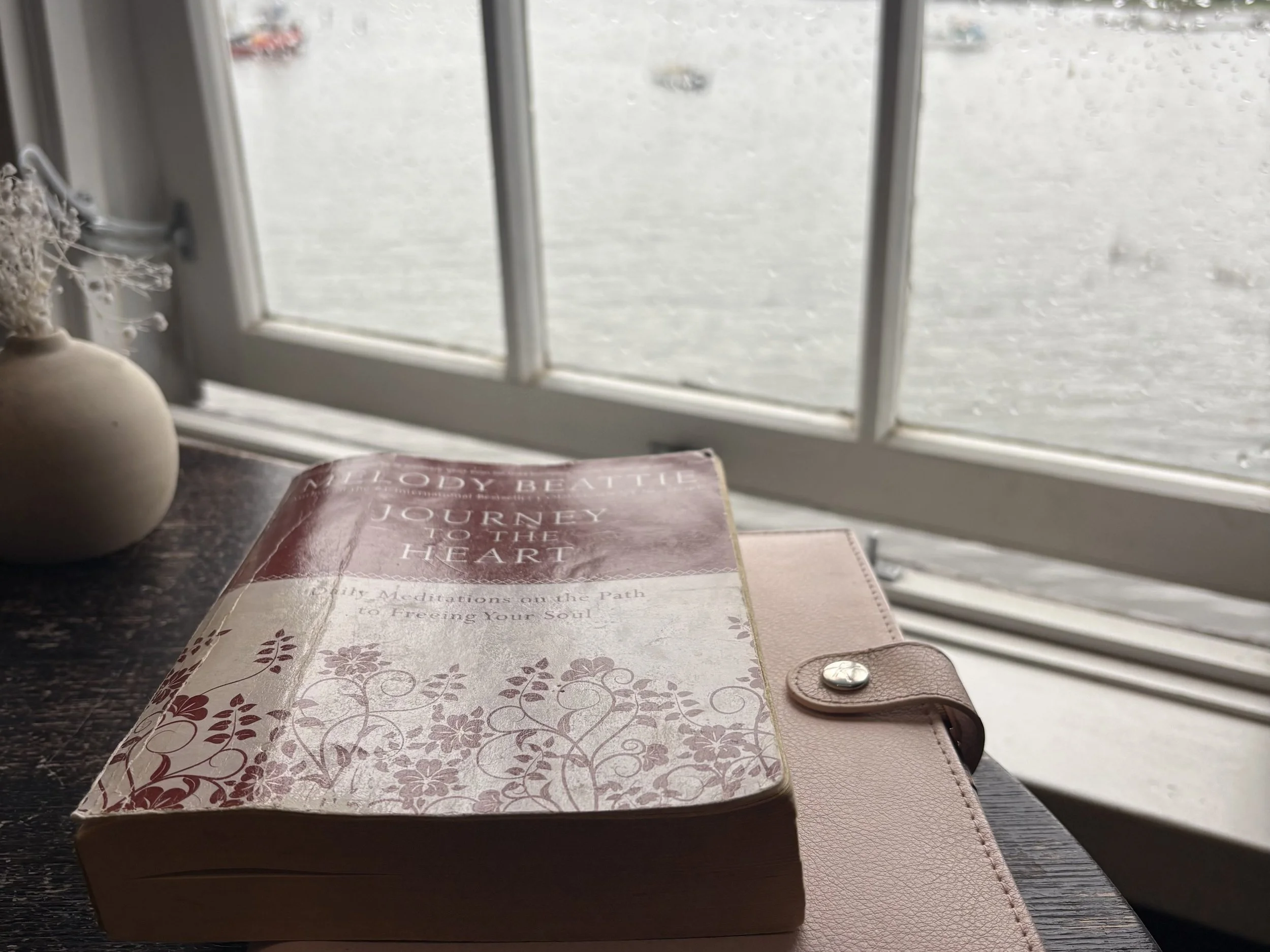
Most mornings begin before sunrise. I start with an ice bath, move a little, make a coffee, then sit quietly for a few moments to breathe and be present. I read a daily passage from a beautiful meditation book that is now well worn from years of use, its pages carrying the marks of countless mornings spent reflecting on life.
Only then do I open my journal. This practice may vary slightly day to day but includes lines of gratitude, reflection, vision and a focus for the day ahead.
The details have evolved over time, but the intention remains the same, creating a small space each day to pause, reflect and reconnect with what matters most.
Final Thoughts
Looking back, I can see that this simple practice has quietly shaped the way I move through life. Gratitude has taught me to appreciate what I already have, vision has given me a direction to keep moving towards, and a daily intention has reminded me that meaningful change happens one day at a time.
Arthur Brooks writes that happiness is not something we arrive at. It is not waiting for us when we achieve the goal, solve the problem or reach the next milestone. It is something we cultivate through purpose, meaningful relationships, gratitude and love.
Gratitude allows us to pursue what is possible tomorrow while appreciating what is already here today.
When we talk about longevity, we often focus on movement, nutrition, sleep and stress management, and I still believe those foundations are fundamental. But perhaps living well also requires moments of stillness, reflection and intention.
Perhaps that is why I still begin most mornings with a few quiet moments.
This practice has become so much more than journalling. It has become part of how I choose to live.