Reset and Refine
Reset and Refine
What could 30 days of focusing on the foundations teach you about how good you can really feel?
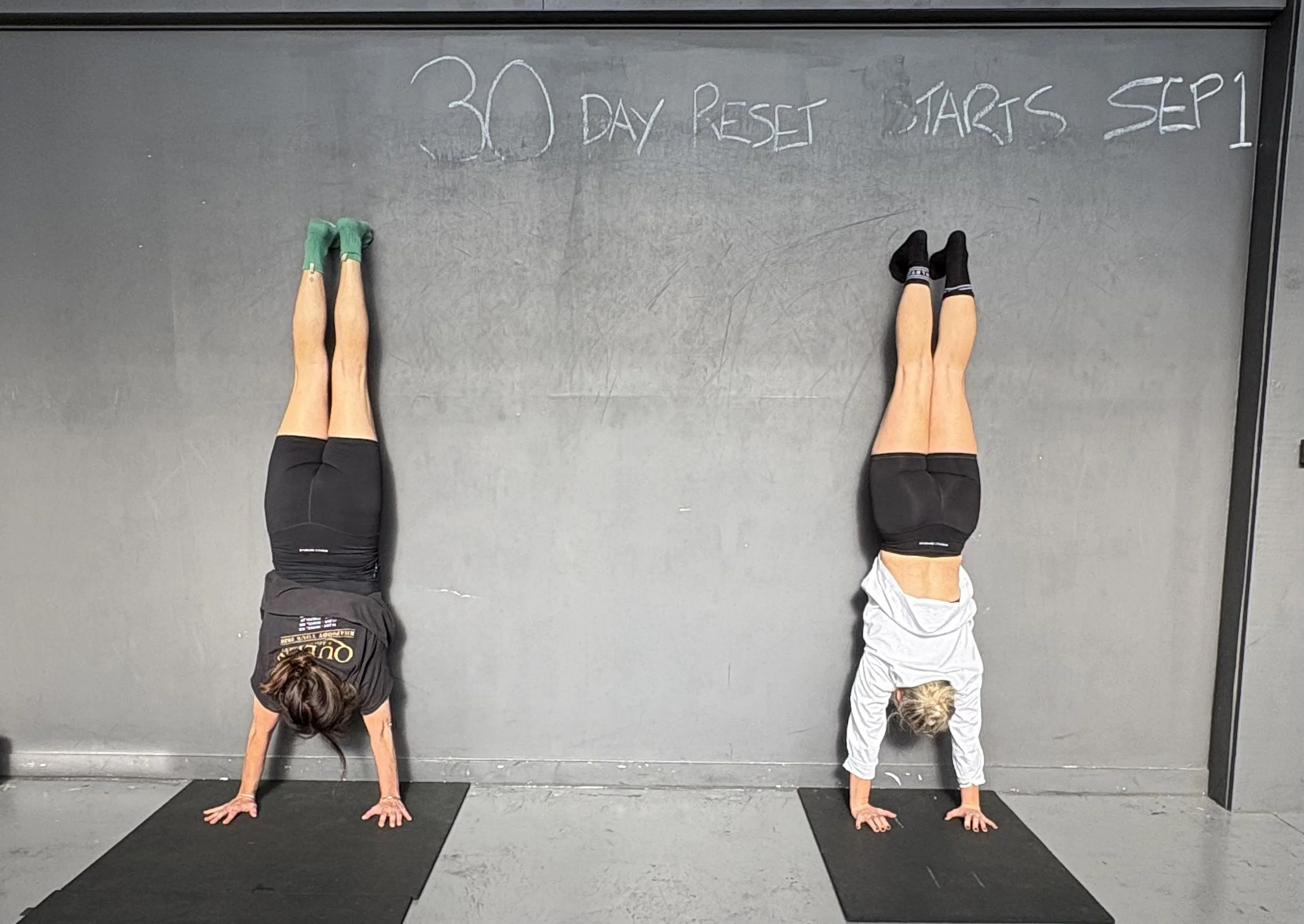
There has been a bit of talk at the gym about the upcoming 30 Day Reset, and some of the conversations I have had with clients have made me think about what a reset means.
Some people were super keen and started two weeks early. Others wanted to know the rules before they had even decided to take part. Is it no sugar? No alcohol? What exactly do I have to do? Some said they are on a constant reset and then there were those who simply said they were not interested.
I think there is something valuable in a reset for everyone.
As a health coach, I have helped guide people through several resets over recent years and, while there have always been guidelines, their real value goes much further than simply following a plan for a set period of time. A reset gives us an opportunity to increase awareness, come back to the foundations of our health and take an honest look at the areas that might need more attention.
Sometimes we need that structure. Sometimes we need to be challenged a little. And sometimes we do not realise how much better we could feel until we change something consistently for long enough to notice the difference.
For me, that is where a reset becomes an opportunity to reset and refine.
My First Reset
For years, I followed a low-fat, low-calorie approach, believing eating less was the answer. I had poor gut health, low iron and carried extra weight that I had struggled to lose since having my three children. I tried different diets and quick fixes, but none of them gave me the health I was looking for.
At 48, I started strength training and my trainer at the time gave me one very simple piece of advice.
“Just eat real food.” That was my reset.
It challenged much of what I thought I knew about food at the time, and it gave me a very clear place to start. But I did not wake up the next morning eating the way I do today.
I began choosing real food over refined and processed food and started paying more attention to the quality of what I was eating rather than simply eating less. From there I studied nutrition more, experimented with different approaches and continued to refine what worked for me. Over the years I have tried low carb, paleo, GAPS and even carnivore. Some things stayed, others did not, and my approach continued to evolve as I learned more and as my body, health and training changed.
Prioritising protein came later, as I understood more about muscle, strength, recovery and what my body needed as I moved through menopause.
None of this happened overnight. Small changes gradually became habits, and those habits eventually became the foundations of how I eat.
That is why I see real value in taking 30 days and committing to doing things differently. It is long enough to interrupt some of our usual habits, pay attention to how we feel and perhaps discover that something we thought would be difficult is worth continuing.
The 30 days might be the reset. What we learn from them is where the refining begins.
Nourishment Rather Than Restriction
Nutrition conversations often begin with what we need to remove. No sugar. No alcohol. No processed food. No grains. A growing list of things we should not eat.
There can absolutely be value in removing foods that are not serving us, particularly when doing so for a period allows us to notice the effect they were having. Sometimes clear boundaries are exactly what we need.
But I also think there is enormous value in shifting some of our attention towards what we are choosing to put in. Food is nourishment.
It provides the raw materials our body needs to build muscle and bone, produce hormones, support our brain and immune system, recover from training and illness and provide the energy we need to live our lives.
When I strip away the different diets, rules and nutritional debates, I keep coming back to two simple priorities:
Real whole food and adequate protein.
And if you are participating in a reset, I think these are two areas worth exploring.
Come Back to Real Food
I have always loved food and cooking, not just because of how food tastes or fills a plate, but because of its ability to nourish, strengthen and sustain us through life.
Real food is food our grandparents and generations before us would recognise. It is food that has been grown or raised and is as close to its natural state as possible. For me, that means quality meat, eggs and fish, vegetables and fruit, good fats and other nutrient-dense whole foods.
I am certainly not perfect with my food. I love chocolate and coffee, I eat out and I enjoy sharing food with family and friends. But I make choices based on what I know and what I want for my health.
As one of my mentors, Cyndi O'Meara, always says:
“When you know better, you do better.”
A reset gives us an opportunity to put some of that knowledge into practice, to notice your energy, your sleep, your recovery, how you feel after you eat, rather than simply counting down the days until you can have something again.
Prioritise Protein
Within that real-food foundation, protein has become one of my biggest priorities.
Protein is often associated with building muscle, but its role in our body goes much further. It provides the amino acids required for the ongoing repair and renewal of our cells and tissues and is involved in our enzymes, hormones, neurotransmitters, immune system and connective tissue.
From our thirties onward, we can begin to lose muscle, and for women this can accelerate through menopause as estrogen declines. Losing muscle affects much more than how our body looks. It affects our strength, bone health, metabolism, mobility and ultimately our ability to remain physically capable and independent as we get older.
Protein and strength training work together. Strength training provides the stimulus for our muscles to adapt, while protein provides the amino acids our body needs to repair and build that tissue.
For active adults wanting to build or maintain muscle, particularly as we get older, I generally work within a range of around 2 to 2.2 grams of protein per kilogram of body weight each day.
For me personally, post-menopause combined with the strength training I do, I aim towards the upper end of that range as a minimum, mostly from animal-based sources such as meat, eggs, fish and quality dairy. Prioritising protein has helped me build and maintain muscle through menopause, sustain my training and support recovery.
One of the simplest things you can experiment with during a reset is making protein the starting point of every meal, then building the rest of the plate around it.
The Power of Doing Fewer Things Well
This is where real food and protein come together. The reset gives us clear guidelines to change things up for 30 days. At the same time, rather than putting all our attention on what has been removed, we can make what we are adding equally important.
When quality protein becomes the starting point for a meal and we build the rest around real, nutrient-dense food, many of the choices we are trying to reduce naturally start to occupy less space.
This is what I think of as crowding out.
A breakfast built around eggs and real food leaves less room for highly processed breakfast foods. A substantial lunch containing enough protein and whole-food ingredients is more nourishing than eating something small and then trying to fill the gaps throughout the afternoon.
Over time, the foods that genuinely nourish us begin to crowd out some of the foods that do not.
We still decide what we eat and drink, and I believe those choices matter. Guidelines can provide structure, accountability and a reason to challenge ourselves, but understanding why we are making those changes gives us a reason to continue making them when the reset is over.
How good could you actually feel?
We become accustomed to our normal. We get used to afternoon tiredness, disrupted sleep, cravings, poor recovery, feeling sluggish or simply not having the energy we once had. Sometimes we assume that is just how we are.
But what if some of it could change?
You will not know what difference 30 days of consistently taking care of the basics could make unless you are prepared to explore it.
Not because we need to be perfect, but because we may be capable of feeling, moving and living better than we currently realise.
Reset and Refine
I do not think we ever finish working on our health.
At different stages of life, different foundations need our attention. Sometimes it is nutrition. Sometimes it is movement, sleep, stress or recovery. Even when we are doing many things well, life changes, our bodies change and our understanding continues to grow.
That does not mean we have failed and need to start again. Sometimes we simply need an opportunity to pay attention.
The way I eat today has been built over years, not 30 days. I did not make every change at once. I learned, experimented, challenged some of my old beliefs, made different choices and gradually built a foundation that supports the way I want to train, feel and live now.
And I am sure I will continue to refine.
Commit to the 30 days. Challenge yourself where you need to be challenged and become aware. Notice what changes. Notice what you learn about yourself. And when the 30 days are over, decide what you are ready to carry forward.