More Than Movement
The Power of Movement – A Client’s Story
I am so very grateful for the opportunity to be a coach, to share the joy and power of movement with others, to see their progress and to inspire change for life.
What I could not have anticipated was just how often the people I meet and work with would inspire me.
Recently, I had a conversation with one of our Movement 4 members that has stayed with me. She reflected on how much her life had changed since joining the gym and I was touched by the emotion behind her words. We were talking about movement and recovery, but what she shared went well beyond the physical progress she had made.
Her experience reminded me of the power of movement, but also the importance of the people who encourage us, support us and help us discover what we are capable of.
Finding Her Way Back to Movement
Following a serious accident, she had faced a long and difficult recovery. Her injuries were initially misdiagnosed, and it was only after further investigations, which she had to pursue herself, that the extent of the damage became clear. What followed was months of treatment, rehabilitation and uncertainty about what recovery might look like.
Her experience is an important reminder of why we need to be advocates for our own health. We place considerable trust in medical professionals, but that does not mean every diagnosis or treatment will provide all the answers. When symptoms persist or recovery is not progressing as expected, we need to feel confident asking questions, seeking further investigation and exploring other appropriate options.
Although she gradually recovered enough to manage most of her everyday activities, she continued to experience pain, discomfort and limitations in movement. Over time, this had a significant impact on her confidence, and there was understandable fear around doing something that might cause further pain or injury.
Rather than accepting that her recovery had reached its limit, she began researching movement and mobility-based training, eventually finding her way to Movement 4.
Having never really participated in strength or mobility training, she stepped into an unfamiliar environment, discovering movements she could not do and physical limitations she had not previously recognised. After everything she had already been through, beginning something new was far from easy.
"I had no idea what I was doing and kept discovering new things that my body apparently couldn't do. I felt embarrassed, and stupid, that I'd been neglecting my body for years without realising."
I think many of us can relate to the uncomfortableness of being a beginner, particularly when we are surrounded by people who appear more capable or experienced. But when we add pain, fear and a loss of confidence, even relatively simple exercises can feel overwhelming.
I remember seeing her frustration and emotion when something felt particularly difficult. She wanted to improve, but the process was challenging. Looking back, I have a greater appreciation of just how much courage and persistence it took for her to keep coming back.
"I think it's a small miracle that I stuck with it in those first six months or so. I don't think I would have without the kindness and encouragement of people around me."
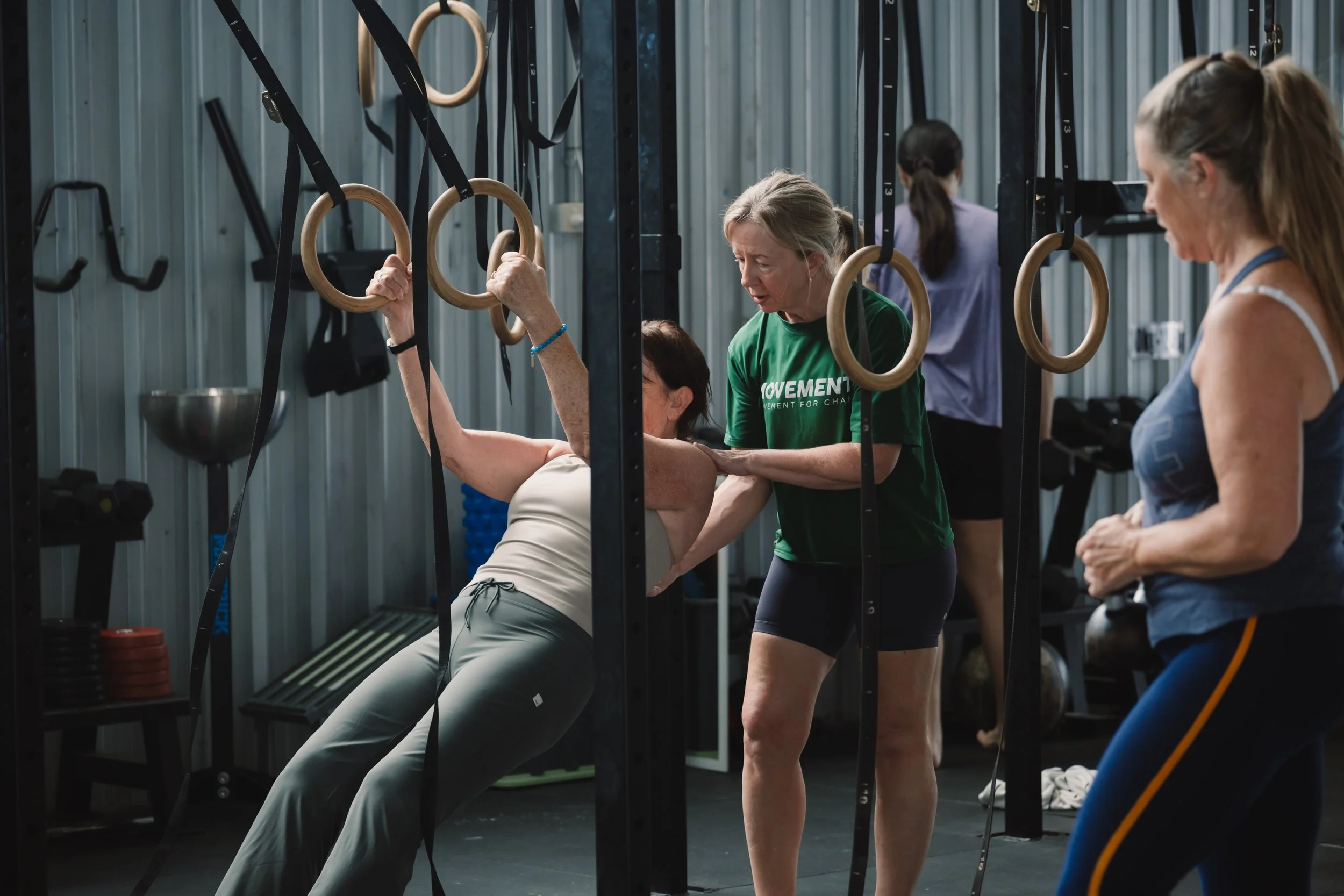
She spoke with genuine gratitude about the coaches and members who offered patience, encouragement and support during those early months. Their kindness helped her continue when she was struggling with her confidence and finding the experience difficult.
Over time, with consistent practice and appropriate progression, her strength and movement improved, and so did her confidence. She began to discover what she could do rather than focusing only on what she could not.
Today, she still finds plenty of things challenging and suspects she may spend the rest of her life working at many of the movements we practise. I rather like that perspective, because there is always something more we can learn, refine or develop.
The most significant change is that she no longer experiences the everyday pain and discomfort that she once thought might be permanent. She can do so much more than when she started, and she is no longer conscious of her injuries on a day to day basis.
It is not simply about becoming stronger or more mobile. It is about regaining confidence in her body and being able to get on with life without the same uncertainty that once accompanied movement.
Movement as Medicine
We often hear the expression movement is medicine, and there is considerable research supporting the role of physical activity in maintaining and improving our health. Regular movement supports muscle strength, bone health, cardiovascular fitness and psychological wellbeing.
But its value extends beyond maintaining health. Appropriately prescribed movement can also play an important role in restoring physical function, rebuilding confidence and helping people return to activities they may have thought were no longer possible.
Despite what we know about these benefits, progressive strength and mobility training are not always presented as important options in the treatment and recovery from injury.
We have become accustomed to treating pain and injury through medication, rest, procedures and other interventions, while the potential for appropriately prescribed movement to restore physical capacity can sometimes receive far less attention.
Of course, every injury is different, and pain is complex. There are times when rest, protection, medical treatment and rehabilitation are essential. But avoiding movement for too long can contribute to further losses in strength, mobility and confidence. The challenge is understanding when and how to introduce movement safely, with appropriate guidance that considers the individual, their injury and their stage of recovery.
Pain can be frightening, particularly when we do not fully understand what is happening in our bodies. When we are uncertain about whether movement might make an injury worse, it is understandable that we become cautious. And when that caution is reinforced by advice to avoid activity, finding the confidence to begin moving again can become even more difficult.
But when movement is introduced appropriately, with patience, consistency and good coaching, it can be life-changing.
This client’s experience is a powerful example. Her recovery involved medical care, physiotherapy and other treatment, but it was through discovering structured strength and mobility training, and the encouragement of the people around her, that she began to regain confidence and move beyond limitations she once thought might be permanent.
The Power of Connection
One of the things that stayed with me most from our conversation was how much this member valued the people who helped her along the way.
We often focus on the physical components of exercise: what movements to practise, how much resistance to use, how frequently to train and how to progress. But for someone who is new to exercise or recovering from injury, the environment and relationships can make an enormous difference. Feeling comfortable enough to ask questions, try something unfamiliar, make mistakes and work at our own pace can help us find the confidence to continue.
I see this regularly in coaching. Someone achieves something they did not think they could do, receives encouragement from another client or coach, and gradually becomes more comfortable in an environment that initially felt unfamiliar. These moments may seem small, but they can have a meaningful influence on someone's confidence and willingness to keep trying.
What I particularly appreciate about this member's experience is that she recognised both. Movement helped her rebuild physical capacity, but the kindness and encouragement of others helped her remain engaged long enough to discover what was possible.
It makes me wonder how often we underestimate the difference we can make simply by taking the time to encourage someone, showing patience when they are struggling or helping them feel welcome. We may not give these interactions much thought ourselves, but for someone else, they may be the very reason they find the confidence to come back.
Moments of Gratitude
As another year draws to a close, this conversation has prompted me to reflect on the things I am grateful for and the opportunities that movement has brought into my own life.
I am grateful for the strength and physical capacity I have developed through years of movement and training. I do not take for granted the ability to move the way I do, to continue challenging myself and to keep discovering what my body is capable of.
I am equally grateful for the opportunity to share my love of movement with others.
Coaching has brought people into my life whose courage, persistence and willingness to keep trying have taught me so much. It is a privilege to be part of their progress and to share in the moments when they discover something new about themselves.
As we approach Christmas, perhaps there is value in taking a little time to reflect on the people who have supported, encouraged and inspired us throughout the year, and to recognise the opportunities we have to do the same for others.
We do not always realise the difference we make in someone's life, just as they may not realise the difference they have made in ours.
As this is my last newsletter for 2026, I would like to wish you and your loved ones a wonderful Christmas, filled with moments of joy, connection and gratitude.
Maree x